
Christian Digital Sobriety: Answers to the Modern Dopamine Crisis
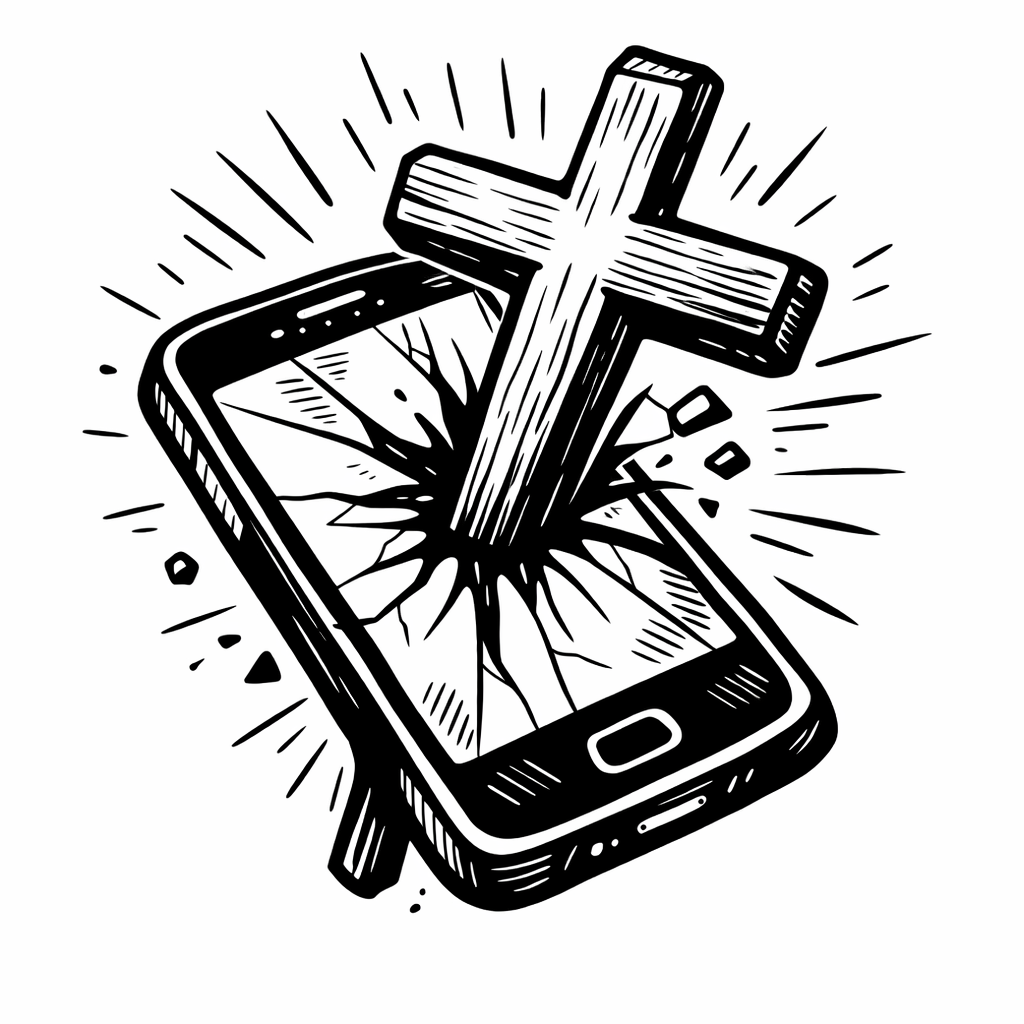
When it comes to addiction, and sensitivity to addiction, I am more sensitive then most, and because of that, I have had to take a more extreme approach to what I allow into my life and what I do not.
For me, Christian digital sobriety means taking an honest look at the tools and apps I use every day and asking a simple question: is this helping me live sober-minded, or is it quietly training me toward distraction, compulsion, and dependency?
I do not present my ways as the only ways. I am not trying to build a universal law out of my own struggles. I only offer these thoughts as guidance for people who feel similarly wired, or for those who have already begun to notice certain patterns in their own health, habits, and attention.
That analysis is what led me to stop using Spotify.
Now at first sight, and for most people, Spotify may seem as a rather innocuous app.
At one level, Spotify is a useful app. It gives easy access to music, podcasts, and discovery. But over time, I noticed that it was becoming harder for me to use it simply. It was becoming more visually stimulating. More cluttered. More promotional. More engineered to keep me looking, clicking, and consuming. It did not feel like a plain music app anymore. It felt like a Social media app, with a UI that is constantly trying to pull me into more.
The biggest issue for me was podcasts. I had become attached to a number of sports podcasts that I did not want in front of me anymore, but there was no clean way to make them disappear from my attention. They kept showing back up. And when something keeps presenting temptation to you, it becomes much harder to pretend the issue is only “self-control.” Sometimes wisdom is not just resisting temptation. Sometimes wisdom is removing it.
So I got rid of Spotify.
Now I use YouTube Music for music and Apple Podcasts for podcasts. That does not mean I have fully solved the problem. I am still very capable of becoming too attached to podcasts. But at least now I can choose healthier ones without the same pull toward the sports content I was trying to leave behind. For me, that change has created a cleaner and simpler digital environment.
And that simplicity matters more than many people realize.
Just as some have felt the intuitive call of the soul for a “Dumb-Phone”, I have felt the call for Dumber-apps.
Many of the most popular apps are addictive by design. Utilizing millions of dollars of funding to create system of dopamine stimulating UI that keeps you coming back for your fix.
But they are simpler apps that perform the same basic function without the same temptation toward wasted time, endless stimulation, or constant ad promotion.
In my case, Spotify versus Apple Podcasts became one of those decisions. Both can play audio. But one felt far more loaded with temptation, noise, and visual pull than the other.
This is not about fear of technology. I am not anti-tech. I use modern tools every day. I benefit from them. But I also think Christians need to become more serious about guarding attention.
We are called to be sober-minded. That command does not only apply to alcohol or obvious vices.
It applies to the mind itself. It applies to whatever clouds judgment, weakens discipline, or keeps us in a state of low-grade distraction all day long.
A person can be outwardly productive and still inwardly fragmented.
The difficult thing is that even the “safe” apps will probably change. Apple Podcasts may eventually update into a more modern, stimulating, reel-filled interface too. If that happens, I may have to leave that app as well. That is the nature of living in a digital world shaped by attention markets. The point is not loyalty to a specific platform. The point is that we must fight for what is healthy for us and for our attention.
That fight will look different for different people.
But I believe more Christians need to think this way.
We should not only ask whether an app is useful. We should ask what kind of mind it is training us to have. We should ask whether it helps us become more prayerful, more attentive, more disciplined, and more at peace. Or whether it leaves us scattered, overstimulated, and hungry for more noise.
Sometimes the wisest digital decision is not finding the strongest app.
Sometimes it is finding the dumbest one.
And keeping it that way for as long as you can.
Leave a Reply