
Wine Industry Woes – Is There a Solution?
‘Never waste a good crisis’
– Winston Churchill
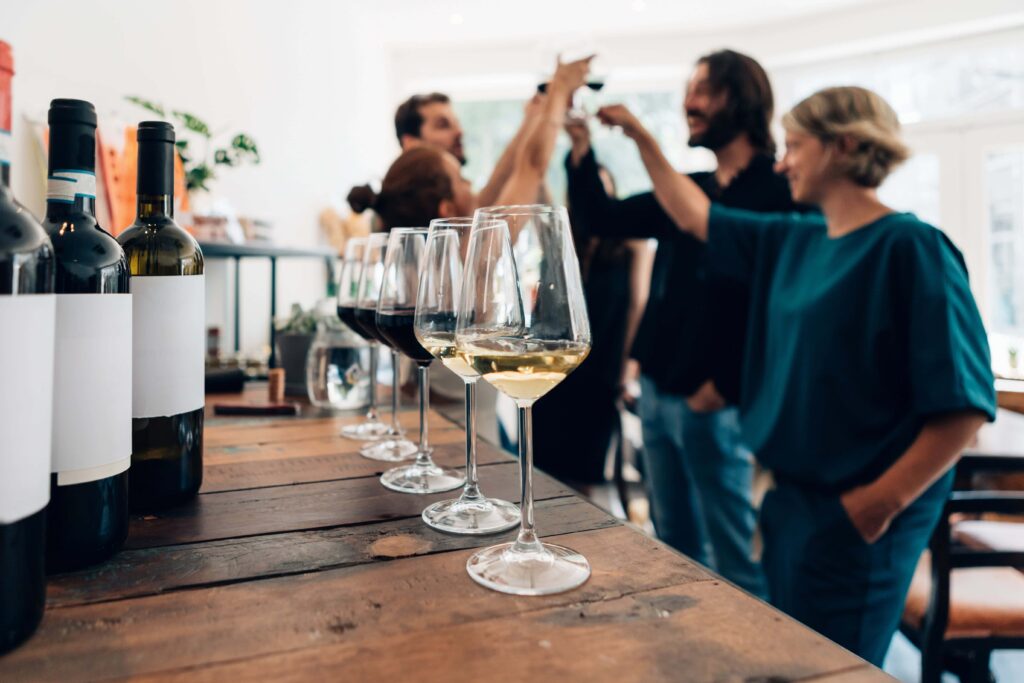
As of Late, The conversation inside the tasting room has been quite bleak. The wine industry workers, owners, and even customers have all heard the reports. Shipment volumes are shrinking. Tasting room traffic is down. Young people are drinking less. Many wineries—especially smaller ones—feel caught in a slide they don’t know how to stop. (winebusiness.com)
But I’m convinced this is the perfect time for entrepreneurship, for thoughtful reinvention, and for people who want to bring opportunity into the industry to step forward.
Despite the turbulence, wine is not dying. It must evolve. And the evolution that lies ahead isn’t arbitrary—it already exists in hints, trends, and cultural signals. The wine industry has to adjust its values.
What was once universally framed as luxury and indulgence must shift toward intention and mission—the language that connects deeply with Millennial and Gen Z consumers. (Wine Enthusiast)
A Shrinking Market and Changing Demographics

Let’s be honest about what’s happening: overall wine consumption in the U.S. has been declining for several years. Volume sales declined not just once, but three consecutive years, and for the first time in decades, spirits may outpace wine in total consumption volume. (Dimensional Insight)
Tasting rooms—once the heart of the direct-to-consumer model for small wineries—saw median sales fall by significant margins across major regions, and younger drinkers aren’t showing up like they did for boomers. (winebusiness.com)
This isn’t just a short cycle. Millennials and Gen Z drinkers are more spread across many categories and generally consume less alcohol than previous generations. Younger adults who do drink often approach it differently—with moderation, intention, or frequency that doesn’t mirror past patterns. (Silicon Valley Bank)
Many consumers have internalized that alcohol is not good for their health. When I work in the tasting room, people will often speak of health concerns as the main factor for cutting back consumption, and who can blame them! They are correct in doing so! I hope we can all agree that drinking less is better for the health of an individual, families, and communities. That awareness is widespread, and it’s not going away.
Time for a Change
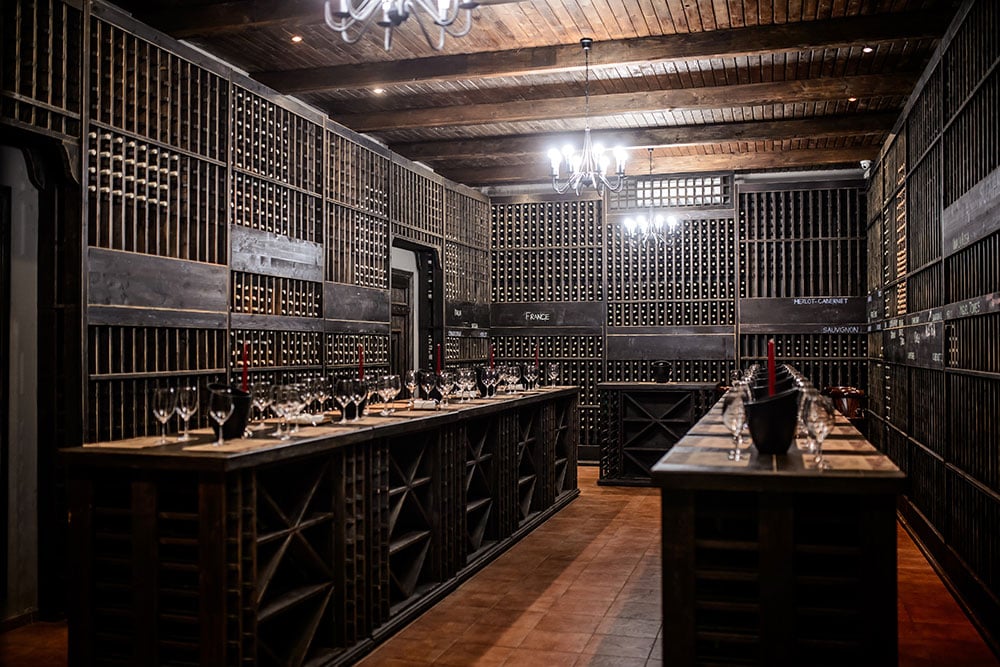
If tasting rooms are declining, vineyards are being pulled out, and the traditional demographic of wine buyers is shrinking, it’s easy to interpret that as failure.
But I think of it differently.
When a market changes, opportunity grows. When old patterns break, new ones emerge.
Wine must become something that resonates with people whose priorities and values are different from previous generations. Gen Z and Millennials relate deeply to companies with a clear purpose and mission—not just an offering. (Wine Enthusiast)
An intentional wine company is one that has a mission beyond selling bottles. That mission may be about:
- approachable wine styles
- transparency and sustainability
- health and wellness
- broadening wine’s cultural relevance
- deeper connection to land and story
Wine can be a product with meaning, not just a commodity.
Who has the Money?

Both Millennials and Gen Z are drinking less, but Gen Z, in particular, has shifted away from the idea that drinking alcohol is a default social habit. Many young adults drink less, choose moderation, or even choose alcohol-free alternatives as part of their lifestyle. (Mustang News)
And with the millennials and the Gen-Z approaching ever closer to the economies main driver of buying power and wealth, it makes sense for companies to position themselves now for those who are going to have the purchasing power in the future
For many, the goal isn’t to get drunk—it’s to share experience, to be intentional, to enjoy without negative consequence. They drink differently, and they think differently about why they drink.
If the industry insists on framing wine only as luxury, spectacle, and indulgence, it will continue to shrink. But if wine can be repositioned as intentional, approachable, healthy in context, and mission-driven, it can find new relevance.
Where Possibility Lives
The future of wine is healthy, and in order for the wine industry to be in a healthy state, the wines must be healthier, and the experiences around them must serve the well-being of the customer.
There are early signs of this shift already happening:
- Growth in no- and low-alcohol wine and wine-based beverages, seen even at major industry events like the Paris Wine Show, reflecting shifting habits. (AP News)
- Younger consumers gravitating toward lighter, more approachable, transparent wine styles. (Food & Wine)
- Reports suggesting Millennials have overtaken Boomers as the largest wine-drinking cohort, even as overall consumption patterns change. (winebusiness.com)
These trends show that wine is not obsolete, just in transition.
The Industry
Yes, the wine business is in a tumultuous time. Yes, tasting rooms are suffering and demographics are shifting. But the industry has weathered upheaval before—changing markets, new competitors, new cultures of consumption.
What matters now is intentionality.
If the wine industry can pivot toward transparency, health-conscious options, lower-alcohol expressions, a deeper connection to story and land, and real relevance for younger generations, then wine will continue to matter.
The story of wine is not over.
Wine is not going to die.
But if the industry stays fixed on old norms, it will shrink.
If it embraces the world we live in—where customers care about mission, intention, and well-being—wine can flourish again.
We don’t have to kill customers to sell wine.
That’s not sustainable.
That’s not healthy.
And it’s not where the future lies.
References:
Silicon Valley Bank. State of the U.S. Wine Industry Report 2024.
https://www.svb.com/trends-insights/reports/wine-report/
Wine Business Monthly. “Tasting Room Sales Trends and Market Contraction Data.” 2023–2024.
https://www.winebusiness.com
Wine Enthusiast. “Can Gen Z and Millennials Save the Wine Industry?”
https://www.wineenthusiast.com/culture/industry-news/
Associated Press. “Low- and No-Alcohol Wine Trends Expand Globally.” 2024.
https://apnews.com
Food & Wine. “Gen Z Wine Trends 2025.”
https://www.foodandwine.com
Leave a Reply