
Cabernet Sauvignon: The Benchmark
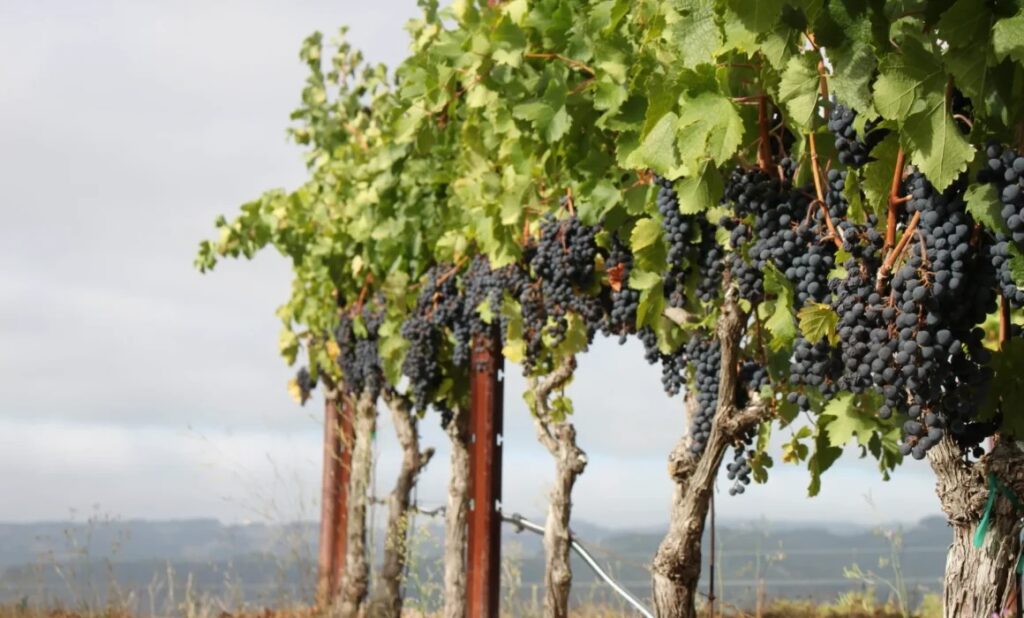
Cabernet Sauvignon is often treated as the benchmark for red wine. It is associated with power, longevity, and prestige, and many guests arrive already confident that they understand it. Yet that familiarity can flatten the conversation. Cabernet is not simply a “big red.” It is a grape defined by structure, patience, and its relationship with place. This essay is part of my ongoing effort to understand Cabernet Sauvignon more clearly and to explain it in a way that feels precise rather than automatic.
Cabernet Sauvignon originates in Bordeaux, where it emerged as a natural crossing between Cabernet Franc and Sauvignon Blanc. From Cabernet Franc it inherits aromatic lift and structure; from Sauvignon Blanc, acidity and clarity. The result is a grape with thick skins, small berries, and naturally high tannins—traits that give Cabernet its backbone and aging potential.
In Bordeaux, particularly in the Médoc, Cabernet Sauvignon became valued not for immediate pleasure but for how it evolved over time. The wines were often firm in youth, shaped by tannin and acidity rather than fruit alone. Over years and decades, those elements softened and integrated, revealing complexity and depth. Cabernet taught growers and drinkers alike that time is an ingredient, not an afterthought.
As Cabernet Sauvignon spread around the world, it carried that reputation with it. Unlike Pinot Noir, which demands restraint, or Chardonnay, which adapts quietly, Cabernet asserts itself. It ripens later, requires warmth, and expresses its structure clearly. In regions with sufficient sun and a long growing season, Cabernet thrives. In cooler or marginal climates, it struggles to fully ripen, often revealing its edges rather than its harmony.
In Sonoma County, Cabernet Sauvignon benefits from both warmth and moderation. Areas like Alexander Valley, Knights Valley, and parts of Sonoma Valley provide the heat necessary for ripening while still preserving acidity through cooler nights. The resulting wines often balance concentration with freshness, producing Cabernets that feel powerful without becoming heavy.
Sonoma Cabernet tends to emphasize structure over excess. Dark fruit, firm tannins, and a sense of shape define the wines, but there is often an underlying brightness that keeps them grounded. This balance makes Sonoma Cabernet approachable earlier than some regions while still allowing for meaningful aging.
When guests ask about Cabernet Sauvignon, I usually frame it around structure rather than flavor. I describe it as a wine built on tannin and backbone, one that feels more architectural than expressive. In Sonoma, that structure is often paired with enough freshness to make the wine feel composed rather than overwhelming. This helps shift expectations away from sheer intensity and toward balance.
I am still learning how to talk about Cabernet without relying on reputation alone. Oak influence, extraction, and ripeness levels can dramatically shape the wine, and those choices matter as much as site. Cabernet can easily become more about technique than place if restraint is lost. Paying attention to where that line exists is part of the ongoing study.
Studying Cabernet Sauvignon is ultimately a lesson in patience and proportion. It rewards long-term thinking, both in the vineyard and in the glass. Cabernet does not rush to reveal itself, and it does not apologize for its structure. That clarity of purpose is why it continues to matter, and why it remains one of the most enduring expressions of Sonoma wine country.
Leave a Reply