
Among the Billions: Simon Sinek
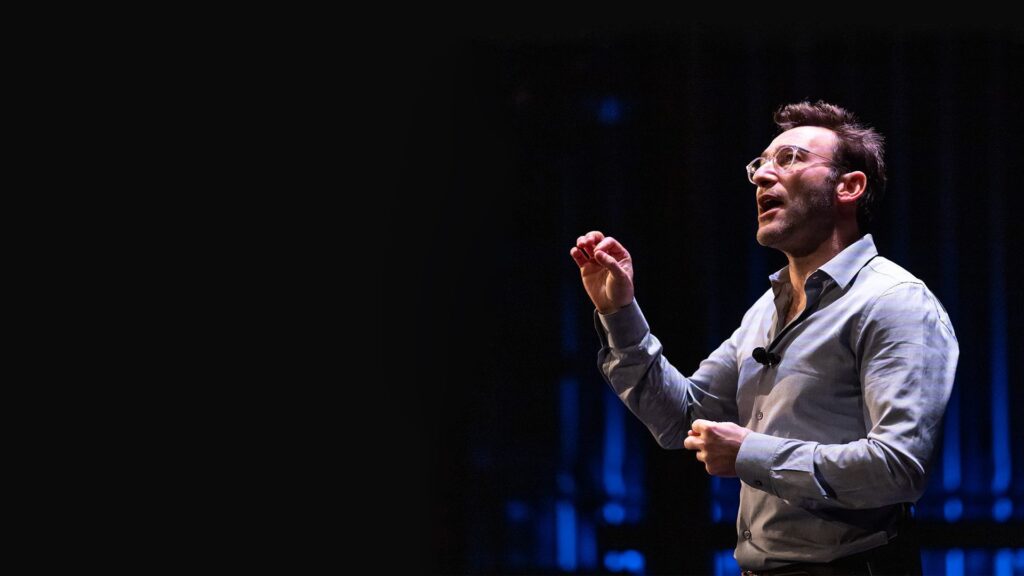
Series — Among the Billions
Across billions of people who speak, advise, teach, and lead, only a small number change the language others use to understand themselves and their work. Simon Sinek stands out not because he invented purpose, leadership, or trust—but because he made them clear, repeatable, and culturally accessible.
His influence is less about spectacle and more about frameworks that stick.
Where He Came From
Simon Sinek was born in 1973 in London and spent his early life moving internationally before settling in the United States. That transnational upbringing exposed him early to differences in culture, communication, and authority—differences that later shaped his interest in leadership and human behavior.
He studied cultural anthropology and later worked in advertising and marketing. This background matters. Sinek learned how ideas are framed, simplified, and spread—not in theory, but in practice.
Before he became widely known, he struggled. He has spoken openly about periods of dissatisfaction, lack of direction, and professional frustration. His eventual work did not emerge from success, but from trying to understand why success felt empty.
The Idea That Changed Everything
Simon Sinek became globally known after a 2009 TED Talk that introduced a deceptively simple concept: Start With Why.
Rather than focusing on what organizations do or how they do it, Sinek argued that the most influential leaders and companies begin with purpose—why they exist at all.
The simplicity of the model was its power.
“People don’t buy what you do; they buy why you do it.”
This idea resonated not because it was new, but because it was legible. Sinek translated abstract leadership ideas into a framework that could be remembered, repeated, and applied.
That alone explains much of his reach.
What Simon Sinek Will Be Remembered For
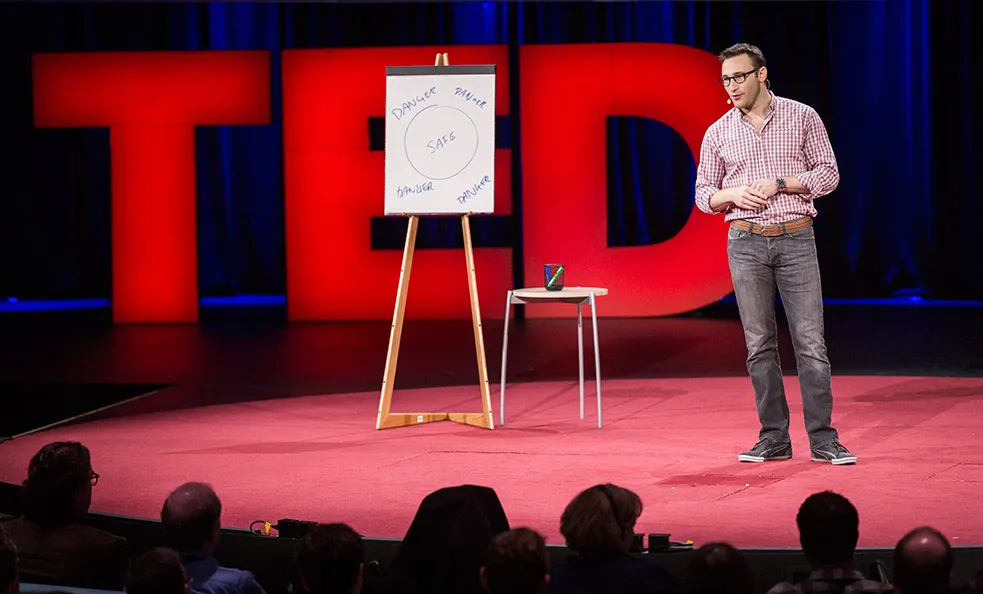
Sinek’s legacy will not be tied to a single organization or movement, but to language.
He introduced and popularized concepts that became part of everyday leadership vocabulary:
- The Golden Circle (Why / How / What)
- Purpose-driven leadership
- Trust as a biological and relational phenomenon
- Long-term thinking over short-term wins
He repeatedly emphasized that leadership is not about authority, but responsibility:
“Leadership is not about being in charge. Leadership is about taking care of those in your charge.”
These ideas became foundational in corporate training, startups, nonprofits, and education.
Psychological Profile: Calm, Order, and Trust
Unlike many public thinkers, Sinek’s presence is notably restrained. He speaks slowly, avoids grandiosity, and rarely dramatizes his delivery. His authority comes from clarity and composure, not intensity.
Psychologically, Sinek operates as a translator:
- he reduces complexity without trivializing it
- he favors explanation over exhortation
- he frames leadership as a moral obligation, not a personal brand
His calm demeanor reinforces his message. Trust is easier to believe when the speaker sounds measured.
The Moral Core of His Work
At the center of Sinek’s thinking is a concern for human well-being inside systems—especially corporate ones.
He consistently returns to themes of:
- psychological safety
- trust within groups
- the biological effects of stress and belonging
- the long-term cost of purely transactional leadership
One of his more pointed observations captures this concern:
“A company is strong when its people trust it.”
Sinek’s work sits at the intersection of ethics and effectiveness. He argues that caring for people is not only morally right, but strategically sound.
Criticism and Limitations
Sinek’s popularity has also drawn criticism.
Some argue:
- his ideas oversimplify complex organizational realities
- purpose language can be co-opted as branding without substance
- his frameworks are more diagnostic than prescriptive
These critiques are fair. Purpose without structure can become empty rhetoric. Sinek himself has acknowledged that ideas alone are insufficient without consistent action.
His work is best understood not as a complete system, but as a starting lens—a way to ask better questions.
Influence at Cultural Scale
Few thinkers reach the level where their ideas become common reference points. Sinek achieved this.
His concepts are now embedded in:
- leadership development programs
- startup culture
- corporate onboarding
- nonprofit strategy
- everyday conversations about work and meaning
When people ask why they do what they do, they are often unknowingly echoing Sinek.
Why Simon Sinek Stands Out Among Billions
Simon Sinek stands out because he made abstract human concerns—purpose, trust, belonging—speakable.
Among billions of people offering advice on leadership, very few permanently change the vocabulary others use to think and act. Sinek did.
Leave a Reply