
Among the Billions: Louie Simmons
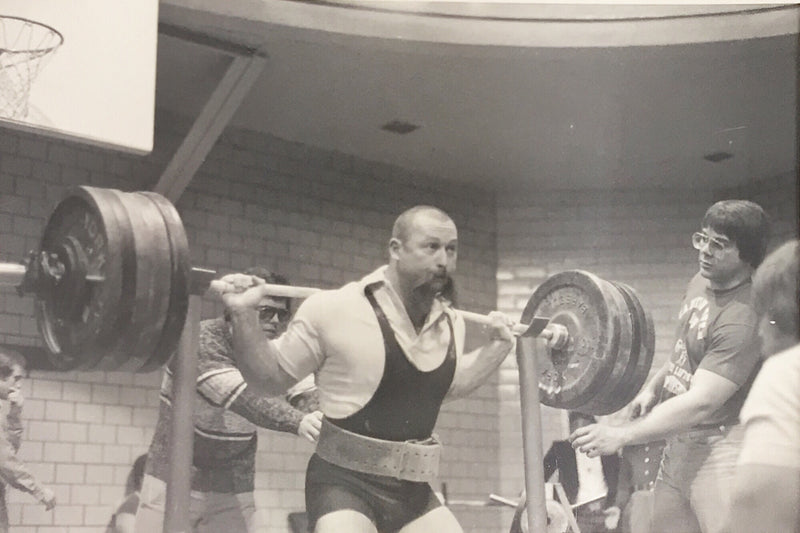
Architect of Modern Strength
Series — Among the Billions
Across billions of lives, very few individuals permanently change how an entire field thinks. Louie Simmons belongs to that rare category. He will be remembered not for popularity or aesthetics, but for redefining the logic of strength training and building a system that continues to influence athletes across sports.
Origins and Formation
Louie Simmons was born in 1947 in Detroit, Michigan. The industrial character of the city—mechanical, physical, unforgiving—mirrored the way Simmons would later approach training. Strength, to him, was never abstract. It was mechanical and measurable.
He entered powerlifting during a period when training was largely linear and tradition-bound. From the beginning, Simmons showed a tendency to question established methods. Rather than accepting plateaus as inevitable, he treated them as technical failures that could be solved.
Lifting was not a phase or a platform for Simmons. It was a lifelong pursuit and a problem he never stopped working on.
Westside Barbell as a Training Laboratory
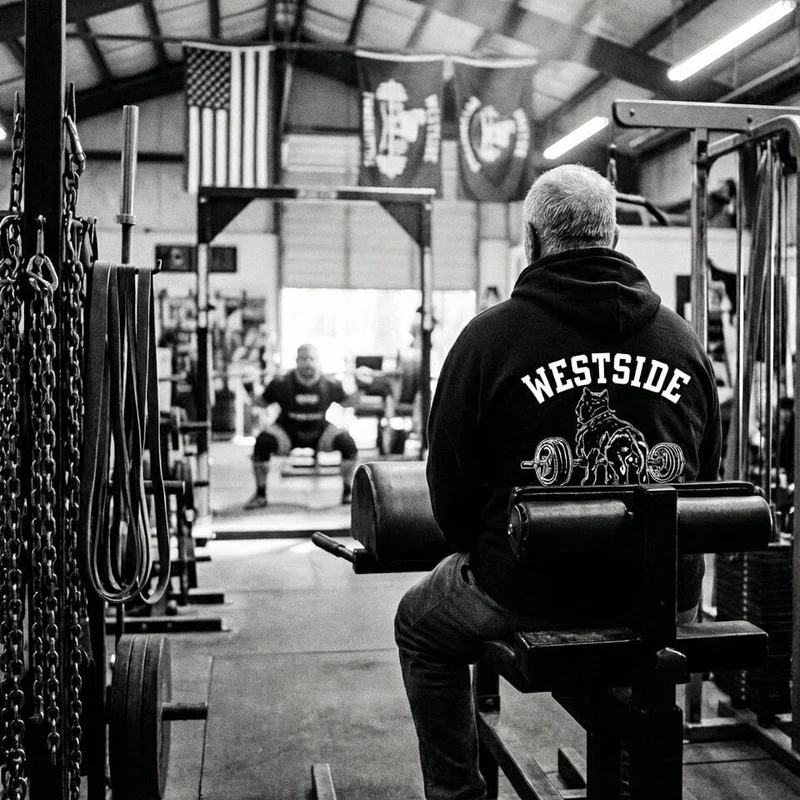
Simmons founded Westside Barbell in Columbus, Ohio. It was not intended to be a business or a public gym. Westside functioned as a controlled environment where ideas could be tested under extreme conditions.
Simmons described the gym as a place where training variables were constantly adjusted. One of his most repeated ideas was that stagnation came from repetition without variation. As he put it:
“The same stimulus produces the same response.”
Westside lifters rarely performed the same max effort lift two weeks in a row. This constant rotation of movements was designed to avoid neurological burnout while still developing maximal strength.
What Louie Simmons Will Be Remembered For
Simmons’ lasting contribution is not a single lift or athlete, but a framework that reshaped training across disciplines.
He formalized and popularized:
- Conjugate periodization in American strength culture
- Accommodating resistance through bands and chains
- Dynamic effort training to develop power and bar speed
- Max effort variation as a solution to plateaus
- Accessory work as structural preparation rather than filler
Simmons often emphasized that strength was multifaceted:
“Strength is specific.”
This idea pushed athletes to train weaknesses directly rather than hoping they would resolve themselves through general training.
Speed, Force, and Adaptation
One of Simmons’ most influential ideas was that speed under load mattered as much as maximal weight. He argued that moving submaximal weights explosively trained the nervous system in ways slow lifting could not.
He frequently warned against neglecting this quality:
“Slow is slow.”
Dynamic effort days at Westside were not optional or secondary. They were integral to developing usable strength, particularly for athletes whose performance depended on rapid force production.
Love for Lifting as Discipline
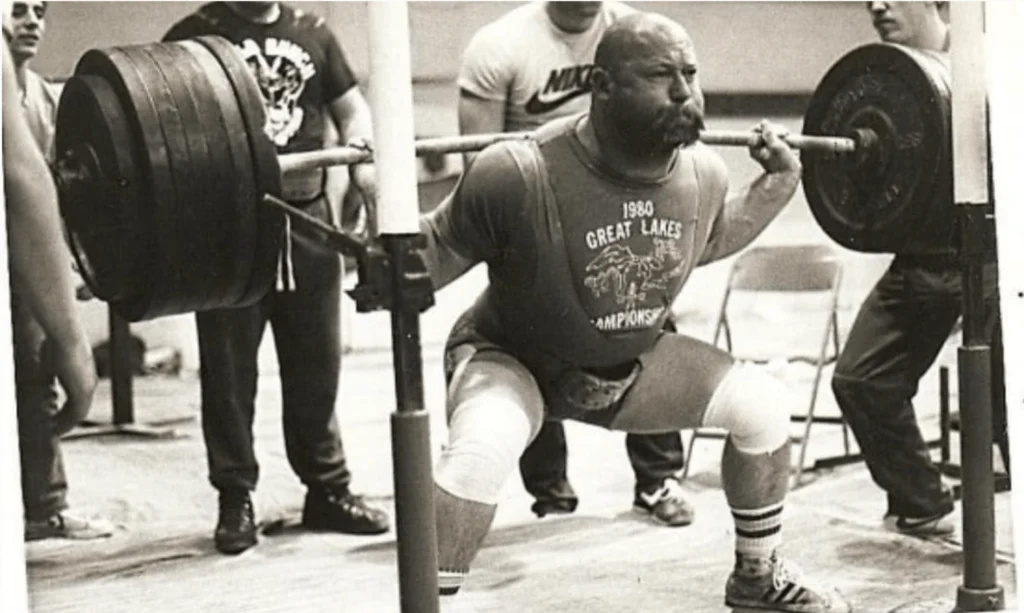
Simmons’ relationship with lifting was not emotional or performative. It was disciplined and methodical. Even after severe injuries—including a broken back—he continued to train and coach.
He viewed training as a responsibility rather than an expression of motivation. One of his recurring statements reflected this attitude:
“If you don’t train your weaknesses, they will break you.”
For Simmons, discomfort was diagnostic. Pain, fatigue, and failure were signals that something needed adjustment—not excuses to stop.
Samurai Philosophy and the Way of Training
Simmons frequently referenced samurai culture and Bushidō. He believed strength training mirrored the warrior ethic: consistency, loyalty to practice, and acceptance of hardship.
Rather than treating training as self-expression, he treated it as self-discipline. The gym functioned like a dojo—rules mattered, repetition mattered, and ego was secondary to mastery.
This philosophical framing separated Simmons from trend-driven fitness culture. Training was not about appearance or identity signaling; it was about refinement through repeated effort.
Controversy and Criticism
Simmons’ methods were not universally accepted. Critics argued that Westside training was too complex, too extreme, or unsuitable for non-elite athletes. Injury risk was often cited as a concern.
Simmons did not deny that his systems demanded commitment and tolerance for intensity. He argued instead that high performance carried inherent risk, and that ignoring weaknesses was more dangerous than addressing them deliberately.
His response to criticism was consistent: outcomes mattered more than comfort.
Enduring Influence
Simmons’ ideas spread far beyond powerlifting. Elements of Westside programming appear in:
- NFL and collegiate strength programs
- Mixed martial arts training
- Modern conjugate and hybrid systems
- Private performance facilities
Many coaches employ his methods without realizing their origin. That diffusion is a sign of permanence.
Why Louie Simmons Stands Out Among Billions
Louie Simmons stands out not because he lifted weights, but because he changed how strength is understood. He treated training as a system of variables, not a tradition to be preserved.
His legacy is intellectual as much as physical. The concepts he formalized—variation, speed, specificity, and weakness identification—remain foundational in serious training environments.
Among billions of people who trained, very few altered the training itself. Louie Simmons was one of them.
Leave a Reply