
Among the Billions: Tim Ferriss

Tools, experiments, and the craft of intentional living
One of a Kind Intellectual:
Tim Ferriss does not fit neatly into a single category. He is often described as an entrepreneur, author, or podcaster, but those labels undersell the core of his work. At his best, Ferriss functions as a professional learner—someone whose primary output is understanding how others operate and translating that understanding into usable frameworks.
His rise coincided with a broader cultural shift toward optimization, self-directed learning, and skepticism toward traditional career paths. Ferriss did not create these impulses, but he articulated them clearly at a moment when many people were searching for alternatives.
Entering the Mainstream:
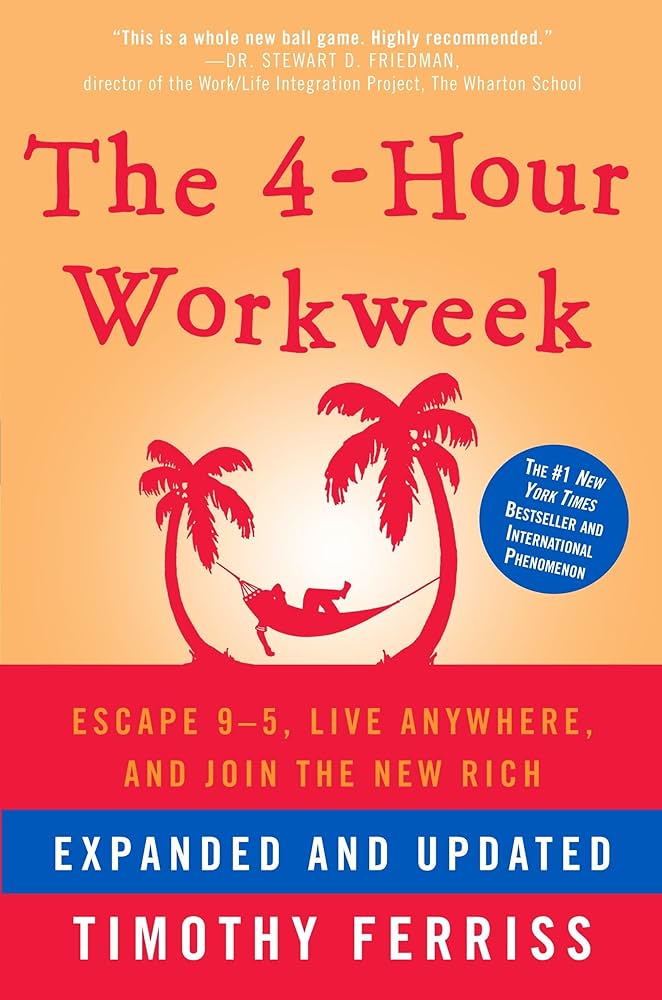
The 4-Hour Workweek introduced Ferriss to a wide audience by challenging assumptions about work, time, and productivity. While the title is often misunderstood as a literal promise, the book’s deeper contribution was conceptual.
It reframed work as a system to be designed rather than endured. Ideas such as selective information consumption, leverage through automation, and lifestyle experimentation offered readers permission to question default paths. For many, this was the first exposure to the idea that freedom could be engineered incrementally.
Whether or not readers adopted Ferriss’s prescriptions exactly, the book expanded the range of what felt possible.
Long-Form Conversation as Craft

Ferriss’s most enduring contribution may be The Tim Ferriss Show. The podcast is built on extended, deliberate conversations with people from a wide range of disciplines—athletes, investors, artists, scientists, and writers.
What distinguishes Ferriss as an interviewer is not charisma, but preparation. Conversations are structured around extracting:
- routines and habits
- decision-making frameworks
- learning strategies
- failure patterns
Ferriss treats each guest as a case study in human performance rather than as a personality. Over time, this approach has created a vast, cross-disciplinary archive of practical insight.
The Life Textbook:
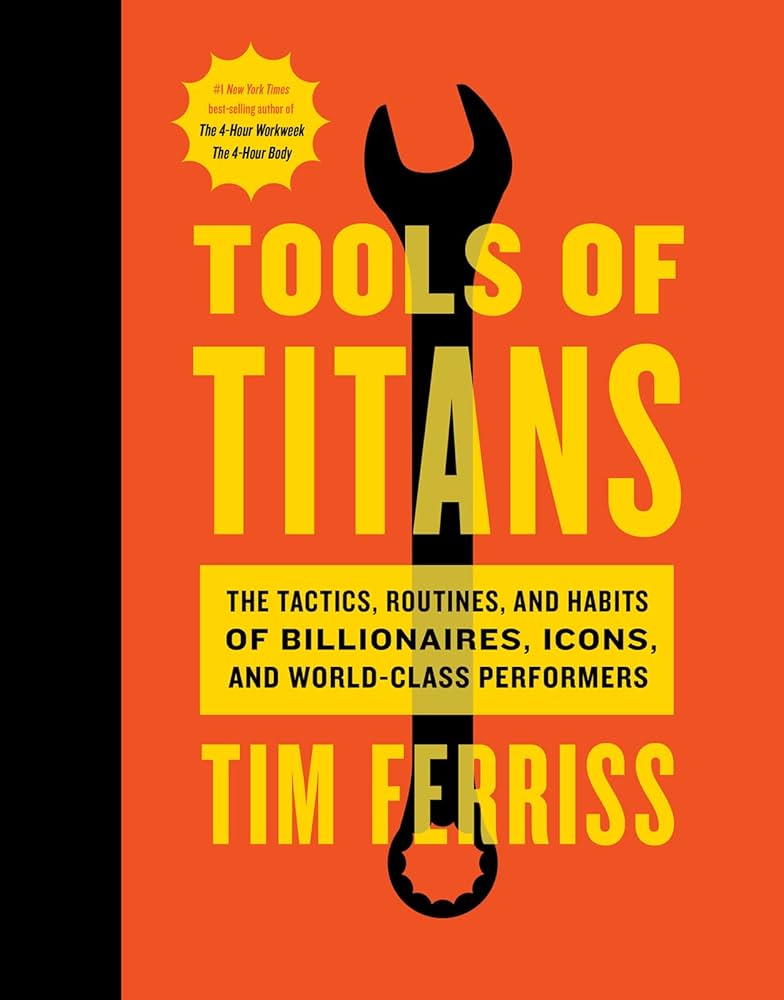
Tools of Titans represents the natural evolution of Ferriss’s process. The book compiles lessons from dozens of podcast guests into thematic sections focused on mindset, routines, and performance. It is less a book to be read cover to cover than a reference to be revisited.
What makes the book distinctive is its editorial discipline. Ferriss does not attempt to harmonize the advice into a single philosophy. Contradictions are left intact. The reader is expected to test ideas rather than adopt them wholesale.
This approach mirrors Ferriss’s broader worldview: progress comes from experimentation, not ideology.
Philosophy of Optimization and Learning

Ferriss’s work consistently returns to a few core principles:
- Small, testable changes compound over time
- Environment shapes behavior more than motivation
- Learning is a skill that can be trained
- Recovery, rest, and reflection are performance tools
These ideas are not presented as universal truths, but as hypotheses. Ferriss encourages readers and listeners to run experiments on their own lives, discard what fails, and keep what works.
For me, this emphasis on process over dogma has been particularly influential. It reinforces the idea that a well-lived life is something constructed intentionally, not stumbled into.
Influence Beyond the Individual:
For many people who came of age in the late 2000s and 2010s, Tim Ferriss represented a new kind of guide. He did not offer a single philosophy or prescribed path, but a way of thinking—one that treated life as something that could be studied, tested, and refined. His influence was rarely sudden. It accumulated quietly through books, conversations, and repeated exposure to how others approached mastery.
Ferriss helped normalize the idea that learning from others could be systematic rather than aspirational. Through long-form interviews and careful synthesis, he made it acceptable to borrow routines, question defaults, and experiment with structure. For a generation navigating work, health, and identity outside traditional frameworks, that orientation mattered.
What made his work resonate was not the promise of optimization for its own sake, but the permission to be intentional. Health, wealth, and happiness were presented not as destinations, but as variables that could be adjusted through attention and practice. Many readers and listeners, myself included, found language for instincts they already felt but had not yet articulated.
Looking back, Ferriss’s impact is best understood not through any single tactic or title, but through the habits of mind he encouraged: curiosity, patience, and the willingness to learn in public. In that sense, his influence extends beyond individual outcomes. It shaped how a generation approached growth itself.
Leave a Reply