
The Great Orators Series: A Study in Speaking Well

Across history and in modern life, a small number of individuals have demonstrated an unusual ability to move others with words. They did not rely on force, position, or spectacle alone. They spoke—and people listened.
Great Orators: A Study in Speaking Well is a series dedicated to understanding that ability.
This project examines speakers who possessed a rare command of attention and explores how they developed it: their temperament, preparation, voice, structure, and presence. History provides the setting, but the focus is the craft of speaking itself.
Why Orators Matter
Speaking well has always been one of the most influential human skills. Long before mass media or technology, spoken words shaped belief, coordinated action, and created shared meaning.
Great speakers do more than deliver information. They:
- clarify reality in moments of confusion
- give language to unspoken fears or hopes
- frame sacrifice as meaningful
- and help people understand what is being asked of them
When speech is effective, it doesn’t just persuade—it organizes attention.
The Power—and the Risk—of Commanding Attention
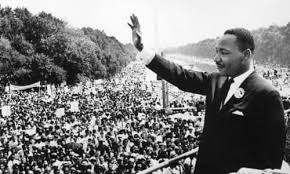
The ability to speak well is not neutral.
History shows that powerful speech can be used to liberate or to deceive, to steady societies or to destabilize them. Charisma itself is neither good nor evil; it is force.
A figure like Adolf Hitler demonstrates how oratory, emotional manipulation, and narrative framing can be weaponized with catastrophic consequences. By contrast, leaders such as Abraham Lincoln used language to reframe moral understanding and move a nation toward justice.
Attention is voluntary. Once granted, it allows speakers to shape how people interpret fear, hope, loyalty, and responsibility. This is why great speakers have always unsettled those in power.
Words as a Threat to Power
Throughout history, speakers have been silenced not because they were violent, but because their words were destabilizing.
- Socrates was executed for questioning how Athenians thought and lived.
- Jesus was killed for speaking in ways that threatened religious and political authority.
- Martin Luther King Jr. was assassinated for articulating a moral vision that demanded change.
None of them commanded armies.
They commanded attention
That alone was enough to be dangerous.
Armies compel obedience through force.
Speakers compel alignment through belief.
The spoken word bypasses institutions and enters directly into belief, imagination, and emotion. When used well, it can hold a society together—or expose it to collapse.
What Makes a Speaker Exceptional
Across eras and contexts, great orators differ in style but share common traits:
- Conviction — belief that is audible and transferable
- Clarity — complexity made understandable without dilution
- Preparation — discipline that enables freedom
- Presence — intentional use of voice, silence, and pacing
- Timing — an instinct for when to press and when to pause
Great speakers are rarely flawless. Many are intense, polarizing, or imperfect. What separates them is not purity, but seriousness about the responsibility of being heard.
Voices Studied in This Series
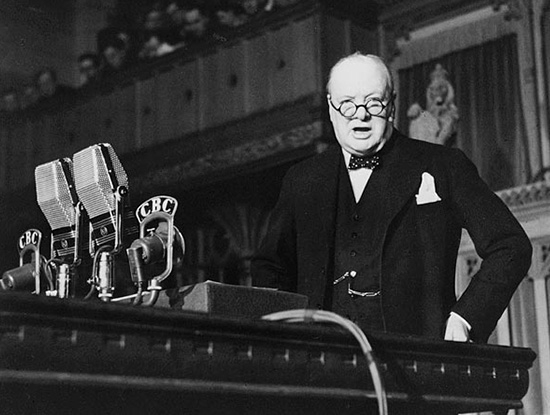
This series studies a wide range of speakers—historical and modern—whose influence came through speech rather than position alone.
Historical Figure such as Winston Churchill, Abraham Lincoln, and MLK who used language to steady a nation under existential threat, demonstrate speech under pressure.
Modern speakers like Eric Thomas, Steven Furtick, and Simon Sinek reveal how urgency, emotional momentum, and calm clarity function in contemporary contexts.
They do not sound alike. That diversity is instructive. Studying range prevents imitation and builds depth.
What This Series Examines
Each profile focuses on the speaker rather than a single famous speech and asks:
- How did this person prepare to speak?
- What defined their voice and presence?
- Why did people trust them?
- How did they read and shape a room?
- What principles can be extracted from their craft?
This is not a catalog of famous lines, nor a public-speaking manual. It is a disciplined study of how speaking works when it works best.
Speaking as a Serious Craft
To speak well is to shape reality—for better or worse.
The power of speech has always been understood, respected, and feared. That is why it deserves careful study, not casual admiration. Great orators matter not because they were flawless, but because they understood how to carry attention—and what responsibility that carries.
Great Orators: A Study in Speaking Well exists to examine that craft with clarity, seriousness, and respect for its consequences.
Leave a Reply