
Brand Study: AG1

Introduction
AG1 represents one of the most disciplined executions in modern wellness branding. In a crowded supplement market defined by complexity, aggressive claims, and constant SKU expansion, AG1 succeeded by doing the opposite: simplifying the product, narrowing the message, and investing deeply in trust-based media.
What makes AG1 particularly compelling is not just its growth, but how it achieved it—through focus, repetition, and alignment between product, pricing, and marketing strategy.
Single-SKU Focus as a Growth Lever
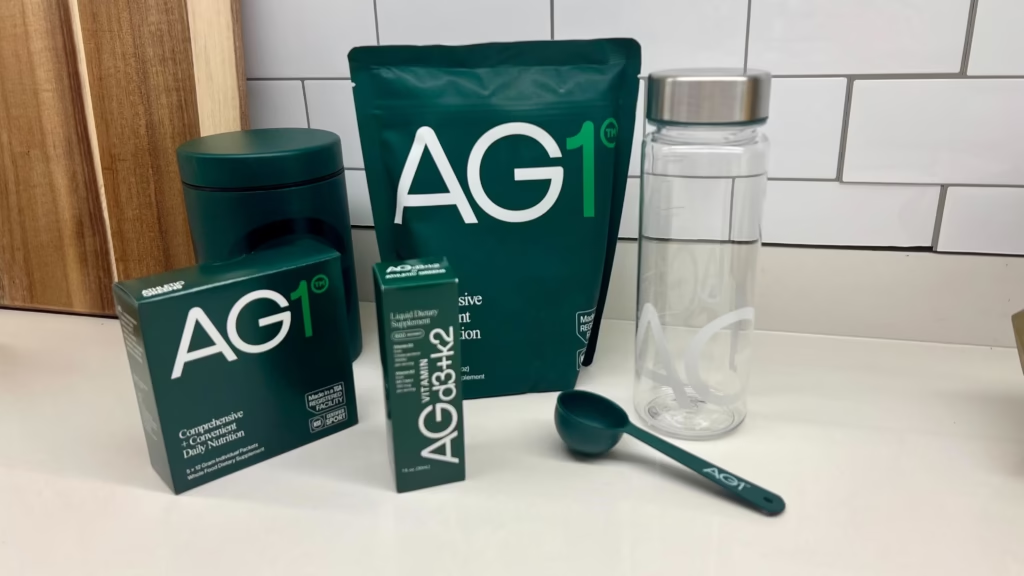
One of AG1’s defining strategic decisions is its commitment to a single flagship product. Rather than expanding into multiple formulas or adjacent supplements, AG1 concentrated its efforts on refining and promoting one core offering.
This single-SKU strategy creates:
- Clear brand identity
- Simplified messaging
- Operational efficiency
- Reduced customer confusion
From a marketing perspective, this focus allows every campaign, partnership, and piece of content to reinforce the same narrative. Customers never have to ask which product is right for them—AG1 is the product.
This clarity compounds over time and is a major reason the brand has been able to scale without dilution.
Product Simplicity & Daily Ritual
AG1’s formulation may be complex, but its usage is intentionally simple: one scoop, once a day. This simplicity positions AG1 as a baseline habit rather than a performance enhancer or short-term fix.
By framing the product as foundational, AG1 avoids competing directly with niche supplements and instead becomes the starting point for health-conscious consumers. This reduces friction at adoption and increases consistency—two critical drivers of long-term retention.
In wellness, consistency beats intensity. AG1 understands this.
Subscription Model & Habit-Based Stickiness
AG1’s subscription-first model reinforces its positioning as a daily ritual. Automatic replenishment removes the need for repeat purchase decisions and shifts the relationship from transactional to ongoing.
This model supports:
- Predictable recurring revenue
- Higher lifetime value
- Stronger behavioral lock-in
Once AG1 becomes part of a morning routine, the cost of switching is no longer financial—it is behavioral. This is true product stickiness, driven by habit rather than incentives.
Podcast Advertising & Trust at Scale
AG1 was one of the earliest wellness brands to fully commit to podcast advertising at scale. The brand sponsored some of the largest and most influential shows in the world, including The Joe Rogan Experience, as well as Tim Ferriss, Huberman Lab, and others.
In March 2022 alone, AG1 reportedly spent over $2.7 million on podcast sponsorships, with shows like Joe Rogan reaching approximately 11 million listeners per episode. Sponsorship at this level guarantees reach—but more importantly, it guarantees context.
Podcast ads allow for long-form explanation, repetition, and personal endorsement. AG1 leveraged this format to educate rather than persuade, embedding itself into trusted conversations instead of interrupting them.
Influencer Strategy: Alignment Over Reach
AG1’s influencer strategy prioritizes credibility and lifestyle alignment over raw audience size. The brand works with creators who already embody routine-driven, health-conscious living—and often already used the product before formal partnerships.
This approach produces content that feels observational rather than promotional. AG1 shows up in real morning routines, kitchens, and daily habits, reinforcing its identity as a staple rather than a trend.
AG1 further strengthens this strategy through custom landing pages tied to specific influencers and podcasts, increasing relevance and conversion while preserving trust.
Media Company Mindset & User-Generated Content
AG1 operates like a media company more than a traditional supplement brand. Its marketing ecosystem spans podcasts, social platforms, influencer channels, and large volumes of user-generated content.
Much of AG1’s strongest social presence—particularly on TikTok and Instagram—comes not from the brand itself, but from customers and creators documenting their routines. This organic content often outperforms paid ads because it reflects lived behavior rather than scripted messaging.
Paid media fuels organic media. Organic media reinforces trust. The loop compounds.
Direct-to-Consumer Control & Premium Positioning
AG1 maintains tight control over its distribution by prioritizing direct-to-consumer channels and limiting third-party marketplace exposure. This allows the brand to:
- Control pricing and brand presentation
- Own customer data
- Personalize onboarding and retention flows
- Defend its premium positioning
In a category vulnerable to commoditization, this control is a strategic advantage.
Synthesis: Why AG1 Works
AG1 succeeds because every part of the business reinforces the same core idea: health is built through consistent, daily habits.
Single-SKU focus creates clarity. Subscription pricing reinforces routine. Podcast advertising builds trust at scale. Influencer alignment preserves credibility. Media-first thinking turns users into advocates.
AG1 does not rely on urgency, novelty, or constant expansion. It earns loyalty through repetition, simplicity, and discipline—qualities that compound over time.
Data Callout: AG1 at a Glance
Brand: AG1 (formerly Athletic Greens)
Business Model: Direct-to-consumer, subscription-first
Product Strategy: Single SKU
Estimated Valuation: ~$1.2 billion
Podcast Ad Spend: ~$2.2–$2.7 million per month (peak periods)
Key Channels: Podcasts, influencer marketing, UGC, DTC website
Core Strength: Habit formation through trust-based media
Core Marketing Principles from AG1
- Focus scales better than expansion
- Subscriptions reinforce habits, not just revenue
- Trust-based media outperforms interruption advertising
- Influencer alignment matters more than follower count
- Simplicity increases adoption in complex categories
Marketing Concept Callout (Reusable)
Marketing Concept: Habit-Based Brand Stickiness
Definition:
A habit-based brand embeds itself into daily routines by reducing friction, simplifying decisions, and reinforcing consistent behavior over time.
AG1 in Practice:
- One product removes choice overload
- Subscription removes repurchase friction
- Podcasts normalize daily use through repetition
- Influencers model real-world integration
Why It Works:
When a product becomes part of a routine, it stops competing on price or features and starts competing on disruption. The harder it is to replace, the stronger the brand relationship becomes.
Leave a Reply