
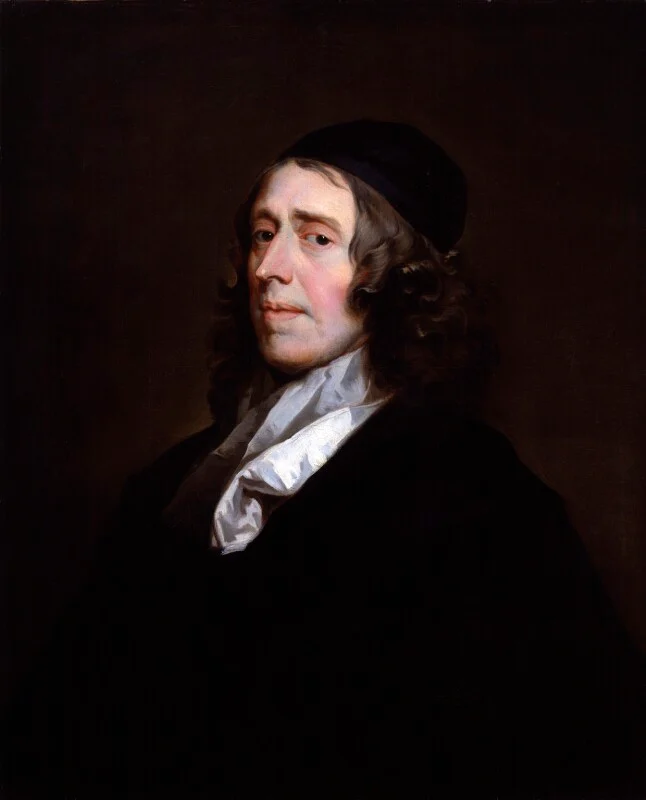
John Owen: Precision and Depth
Quick Take
John Owen (1616–1683) was one of the most rigorous theologians of the Puritan movement. Known for intellectual precision rather than popularity, his writings shaped Reformed theology in Britain and later deeply influenced American Puritanism and evangelical thought.
Where He Came From
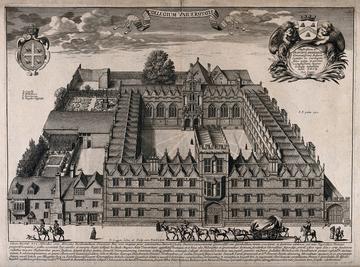
John Owen was born in 1616 in Stadham, Oxfordshire, England, during a period of growing political and religious instability. He was educated at Oxford University, entering at a young age and receiving a classical education grounded in logic, theology, and philosophy.
Owen’s early career unfolded against the backdrop of the English Civil War, a conflict that reshaped church authority, politics, and religious life. These upheavals strongly influenced his theological focus on authority, conscience, and the nature of true faith.
He eventually became a leading figure within the Puritan movement and rose to prominence during the Commonwealth period under Oliver Cromwell.
Snapshot
- Born: 1616 — Oxfordshire, England
- Occupation: Theologian, academic, church leader
- Era: English Civil War & Commonwealth England
Public Role and Recognition
Unlike revival preachers or public orators, Owen was primarily known as a scholar and administrator. He served as Vice-Chancellor of Oxford University from 1652 to 1657, overseeing academic reform during a politically volatile period.
Owen was closely associated with Oliver Cromwell and served as a chaplain to Parliament. This connection placed him at the center of English public life for a time, though his influence declined after the Restoration of the monarchy in 1660.
After the Restoration, Owen lost formal positions of power and lived much of his later life under political and religious restriction. Despite this, his writing output increased rather than diminished.
Intellectual Reputation and Method
John Owen’s reputation rests on theological exactness. He was known among contemporaries for exhaustive argumentation, careful distinctions, and close engagement with opposing views.
His writing style is dense and technical. Owen did not aim for accessibility; he wrote for trained readers, pastors, and scholars. Modern historians frequently describe him as one of the most formidable theological minds of the 17th century.
Owen was deeply influenced by classical logic and Reformed scholasticism. His works often proceed step-by-step, defining terms precisely before advancing arguments. This method made his books demanding, but also durable.
Major Works and Themes
Owen authored numerous theological treatises, many of which remain in print. Among the most influential are:
- The Death of Death in the Death of Christ — a detailed defense of particular redemption
- Communion with God — a systematic exploration of Trinitarian devotion
- Of the Mortification of Sin in Believers — a practical yet theologically grounded work on ethics and discipline
Across these works, Owen consistently emphasized:
- The seriousness of sin
- The necessity of disciplined spiritual life
- The authority of Scripture
- The importance of doctrinal clarity
Influence on American Christianity
Although Owen never visited America, his writings crossed the Atlantic and became foundational for American Puritan clergy and later Reformed traditions.
New England ministers frequently studied Owen’s works, and his theology influenced the intellectual environment that later shaped figures such as Jonathan Edwards. Owen’s emphasis on disciplined theology and moral seriousness resonated strongly within colonial American churches.
In later centuries, Owen’s writings were republished extensively in the United States, especially during 19th- and 20th-century evangelical revivals of Reformed theology. Seminaries and pastors continue to reference his work for doctrinal precision.
Public Perception Then and Now
In his lifetime, Owen was respected but not broadly popular. His influence was strongest among intellectual and ecclesiastical elites rather than the general public.
After his death, his reputation grew steadily among theologians, while remaining limited among lay audiences due to the difficulty of his prose. Today, Owen is often regarded as a theologian’s theologian—more cited than read in full.
Historians generally agree that his work represents the high point of English Puritan scholastic theology.
Historical Significance
John Owen’s significance lies in depth rather than breadth. He did not shape public culture in the way revivalists or political figures did, but he shaped the intellectual foundations upon which later Protestant theology was built.
His work contributed to the durability of Puritan theology beyond its original historical moment, allowing it to survive institutional decline and political defeat.
Takeaway
Owen stands out historically because he pursued theological precision without regard for popularity, producing work that remained influential long after his political relevance faded.
References & Further Reading
Primary Works
- Owen, John. The Death of Death in the Death of Christ
- Owen, John. Communion with God
- Owen, John. Of the Mortification of Sin in Believers
Biographical & Historical Studies
- Kapic, Kelly M. Communion with God: The Divine and the Human in the Theology of John Owen
- Trueman, Carl R. John Owen: Reformed Catholic, Renaissance Man
- Oxford University historical records on Commonwealth-era leadership
Leave a Reply